

The moment a visitor enters Medina, a feeling stirs within them—one that gently makes its way into the heart; a sense of calm that touches the soul before the place itself. Amid its spiritual atmosphere and rich history, many wonder: what is the secret behind this deep sense of peace that sets it apart from anywhere else?
Medina holds great significance in Islam, as it was the city chosen by the Prophet Muhammad (PBUH) for his migration, thereby establishing it as the center of the first Islamic community. Many pivotal events in Islamic history took place here, and it is home to significant landmarks and sites that people from all over the world visit to experience the tranquility that surrounds them. Among the most notable historical places connected to Islamic memory are Mount Uhud, the Well of Gharas, the Seven Mosques, the Mosque of the Two Qiblahs, the Quba Mosque, the Medina Museum, and, of course, the Prophet’s Mosque.
Each of these sites is deeply connected to the prophetic biography and Islamic history. Mount Uhud stands as a witness to the Battle of Uhud, where the Muslims suffered heavy losses and many prominent companions were martyred, including the Prophet’s uncle, Hamza ibn Abdul Muttalib; all were buried nearby. Muslims continue to visit them today to pray for them. The Well of Gharas is the well blessed by the Prophet, while the Seven Mosques are historical landmarks that revive the events of the Battle of the Trench in the collective memory. Attention then turns to the Medina Museum, which stands as a testament to the city’s history, narrating the story of the Prophet Muhammad (PBUH) and his companions through historical artifacts and relics. As for the three main mosques—Quba Mosque, the Mosque of the Two Qiblahs, and the Prophet’s Mosque—they are iconic and well-known throughout the Muslim world.
In this article, we will explore the sacred city and discover its most important landmarks and mosques, while attempting to uncover the secret behind the tranquility that surrounds it.
The Symbolism of the Prophet’s Mosque in the Heart of the City
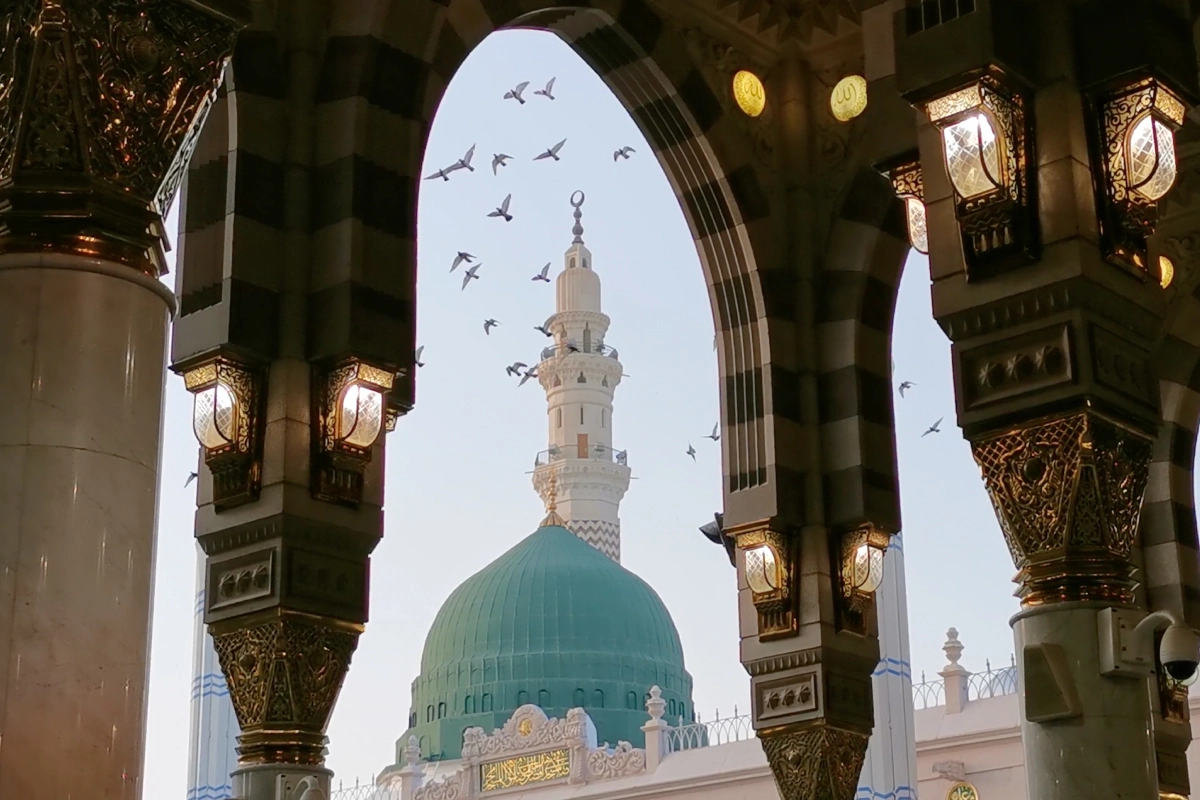
When the Prophet Muhammad (PBUH) arrived in Medina after the long and arduous journey of migration, his first action was to establish the Prophet’s Mosque, which would become the stronghold of his mission and the center of the Islamic state he would establish and lead.
The mosque’s location was divinely inspired, when the Prophet arrived in Medina, the Ansar tried to stop his camel to host him, but he said to them: “Let it go, for it is commanded.” The camel then knelt on the land of two orphans who used it to dry dates. The Prophet purchased the land from them and laid the foundation for the mosque, which would become the center of this noble mission.
If you were to ask visitors about the emotions they experience when they enter the Prophet’s Mosque for the first time, they would describe a mix of calmness, serenity, awe, and reverence. Here, the greatest of creation passed by; here, he prayed, delivered sermons, and taught his companions matters of their faith. Here, he lived, passed away, and was buried. Inside the mosque, you find yourself surrounded by an atmosphere of tranquility, as if everything in the place radiates inner peace: the sound of the adhan, the recitation of the Qur’an, and the scent of the place, which carries the fragrance of history, all contribute to an aura of spiritual greatness.
The stillness that pervades the space makes you feel truly close to the Prophet Muhammad (PBUH) in his sacred place. Every step in this blessed mosque makes you feel the grandeur of the location, as if you are part of a living historical moment.
Islamic Historical Sites in Medina
In addition to the Prophet’s Mosque, there are several historical sites in Medina that have shaped Islamic historical memory. Some of these sites include:
Mount Uhud
Mount Uhud is a mountain range located to the north of Medina, stretching over seven kilometers, and is made of distinctive red volcanic rocks. In the third year of Hijrah, the mountain witnessed a pivotal battle in Islamic history, which was named after it: the Battle of Uhud.
In this battle, the Muslim army of 700 fighters (including 300 hypocrites who withdrew during the battle) faced off against the Quraysh and their allies’ army, which numbered 3,000. The Prophet Muhammad (PBUH) devised a strategic plan to position 50 archers on Mount Uhud to protect the Muslims’ rear, ordering them to stay on the mountain regardless of what happened. This plan was initially successful, and the Muslims were on the verge of victory.
However, some of the archers disobeyed the Prophet’s command and descended from the mountain, thinking the battle was over. This shifted the momentum, leading to the Muslims’ defeat and the martyrdom of several prominent companions, including the Prophet’s uncle Hamza ibn Abdul Muttalib.
Today, Muslims continue to visit Mount Uhud to feel the hardships the Prophet and his companions endured in spreading the message of Islam. The Martyrs’ Cemetery also attracts many visitors who come to pray for the martyrs, seeking blessings and offering their prayers for them.
The Mosque of the Clouds (Masjid al-Ghamama)
The Mosque of the Clouds is one of the historical mosques of great significance in Medina. It is located 500 meters southwest of the Prophet’s Mosque and is named after a cloud that shaded the Prophet (PBUH) while he was praying there.
It is reported that the Prophet Muhammad (PBUH) prayed the Eid prayers, performed Salat al-Istisqa (prayer for rain), and led the funeral prayer for the Negus of Abyssinia, who had accepted Islam and provided refuge to the Muslims when they fled to him.
The Well of Gharas
The Well of Gharas is located in the Quba area, near the Quba Mosque, and is one of the historical wells closely linked to the prophetic biography. It is reported that the Prophet Muhammad (PBUH) used its water for ablution and drinking, and he recommended the Muslims to bathe in it as well.
The Prophet described it as a spring from the gardens of Paradise, saying, “Yes, the well of Gharas is from the springs of Paradise, and its water is the best of waters.” It is also reported that the Prophet (PBUH) instructed some of his companions to wash his body with the water of this well after his death.
Following the Prophet’s recommendation, Muslims still visit the well for drinking, ablution, and to enjoy its blessed water, just as the Prophet did.
What Is the Best Time to Visit Medina?
The best time to head to Medina is from October to April, when the weather is pleasant and suitable for seeing the sights and seeing its famous attractions.
Many Muslims also choose to go to Medina during significant religious holidays, like the holy month of Ramadan or following the Hajj season, because these are periods when they can get more spiritual blessings. These times of year bring in the most tourists, but they also make the location feel more spiritual.
How to Plan a Comfortable Visit to Medina?
Visiting Medina is a deeply spiritual experience, and to ensure a comfortable and peaceful trip, here are some tips to consider while planning:
- Choose the right time to visit: It’s best to visit when the weather is pleasant and not too hot. If you prefer quiet, try to avoid peak times.
- Book in advance: Early booking, ideally weeks or even months before your trip, will guarantee you rooms in hotels close to the Prophet’s Mosque and the city center, allowing you to fully enjoy the experience comfortably.
- Stay near the Prophet’s Mosque: This will save you time and effort on transportation and provide easy access to the mosque for regular prayers.
- Prepare physically and spiritually: Since Medina is rich in mosques and historical sites, it’s advisable to be physically prepared for long walks. Also, plan a suitable schedule for prayer times and moments of reflection at the sacred places.
- Explore major landmarks: Plan visits to important sites such as Mount Uhud, Quba Mosque, the Mosque of the Two Qiblahs, and the Martyrs’ Cemetery at appropriate times so you don’t feel exhausted. It’s better to spread out your visits over multiple days rather than trying to visit all sites in one day.
What Is the Secret Behind the Tranquility and Serenity of Medina?
Medina, with its rich history, is one of the places that deeply touches the heart and fills it with serenity. Every corner and every nook in this city resonates with inner peace and has a profound impact on the soul. Upon entering Medina, visitors immediately feel a shift in the atmosphere, as though time itself pauses in this place that witnessed the beginning of the Islamic message.
The serenity felt by Muslims in Medina extends beyond the mosques and historical sites; it pervades every inch of the land the Prophet Muhammad (PBUH) and his companions walked upon. In particular, at the Prophet’s Mosque, believers feel a sense of calm and peace as though they are connecting with a long history of worship and remembrance. Even the air here is infused with a unique spirituality that helps visitors disconnect from the world’s distractions, allowing them to focus on worship and reflection. Medina remains a symbol of spiritual peace and tranquility, intricately linked with the message of Islam.