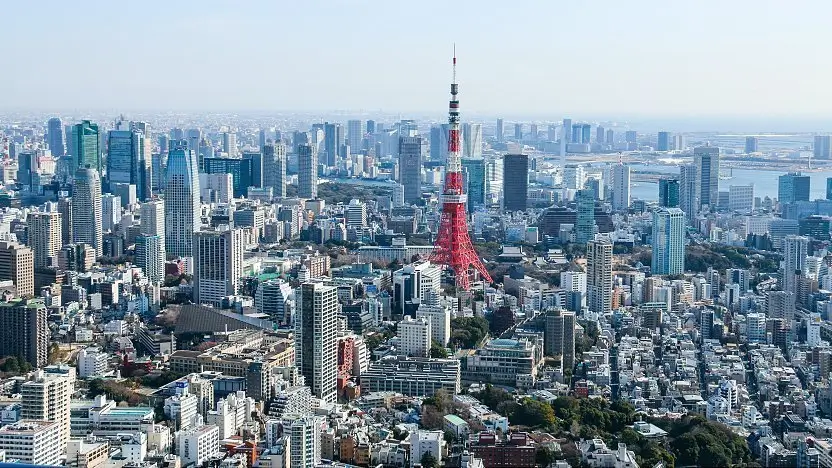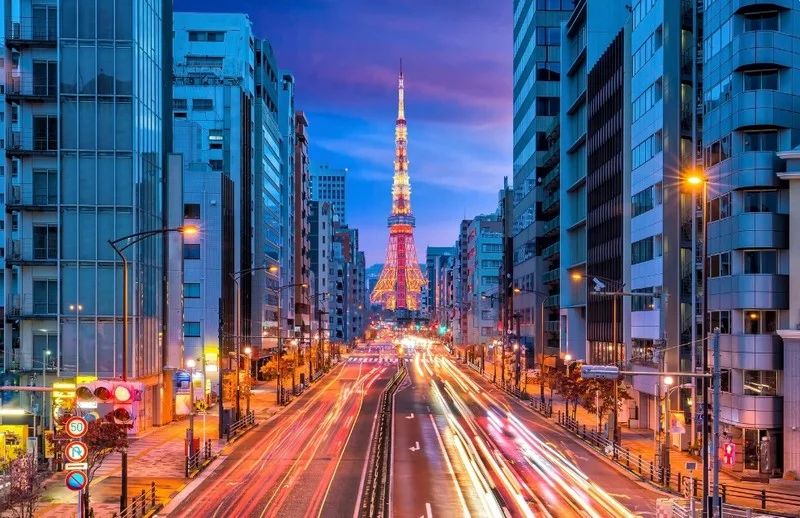
Tokyo is best approached gently. Rather than beginning with its speed and scale, begin with stillness at Tokyo Camii, where the city’s energy gives way to proportion, calm, and a sense of arrival. The mosque traces its history to 1938, welcomes visitors daily, and remains one of the most important prayer spaces in the capital. For a Sakina traveler, this is the right opening: not spectacle first, but anchoring. From here, Tokyo becomes easier to receive, not as an overwhelming metropolis, but as a city that can be entered with intention.
From there, move toward Tokyo’s greener rhythm. Shinjuku Gyoen offers exactly the kind of pause a dense city needs: broad lawns, seasonal color, quiet paths, and a feeling of spaciousness that seems almost improbable in central Tokyo. Official garden guidance describes it as an oasis in the heart of the city, and that is precisely how it feels. This is not a place to rush through. Walk slowly, sit when the light softens, and let Tokyo reveal that one of its most sophisticated qualities is not intensity, but balance.
Then let the city show its more classical elegance through Hama-rikyu and Rikugien. One sits at the edge of Tokyo Bay, remarkable for its seawater pond and floating teahouse setting; the other offers a more inward beauty, with landscaped paths and a poetic sense of composition that rewards unhurried walking. Together, they reveal a side of Tokyo that many visitors underestimate, a city capable of refinement without performance. These gardens are not merely scenic stops; they recalibrate the pace of the journey and make the city feel more habitable, more graceful, and more human.
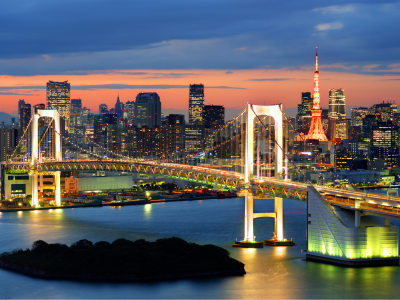
Tokyo also deserves to be experienced through its streets rather than only its landmarks. In Marunouchi, the restored red-brick station building stands against glass towers in a way that feels almost ceremonial, while the surrounding district offers one of the city’s cleanest expressions of urban polish. Later, shift eastward for a slower walk near the Sumida River, where bridges, water, and open sky create breathing room within the city’s density. What makes Tokyo memorable is often this contrast: order and softness, modernity and quiet, architectural confidence and moments of space.
For Muslim travelers, practical ease matters as much as atmosphere. The city’s official Muslim travel guide is designed to make visits more comfortable and meaningful, with listings for places of worship, restaurants, lodgings, and services that accommodate Muslim guests. That support changes the feel of the trip. It allows the journey to remain elegant instead of logistical. And in a city as layered as Tokyo, that elegance matters, because the real luxury is not only what you see, but how peacefully you are able to move through it.
End the day somewhere open and unhurried, a garden path, a river edge, or a quiet plaza near the station district, and let the city settle around you. Tokyo does not always reveal itself through drama. Often, it reveals itself through discipline, detail, and composure. For the Sakina traveler, that is exactly its appeal: a destination where beauty can be found without noise, and where a global city can still leave room for prayer, reflection, and calm.
Attractions & Experiences:
Marunouchi district walk
Sumida River Walk