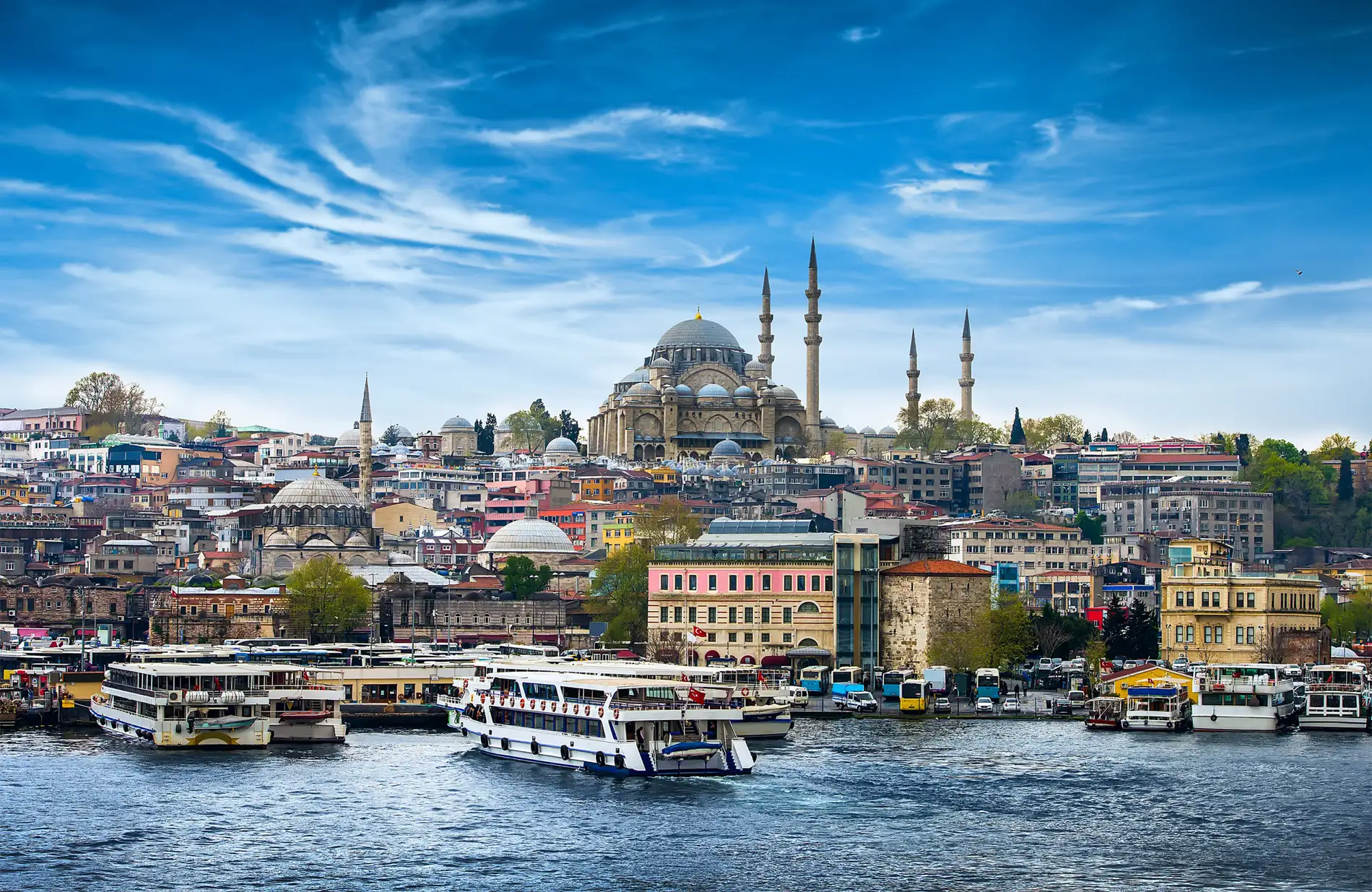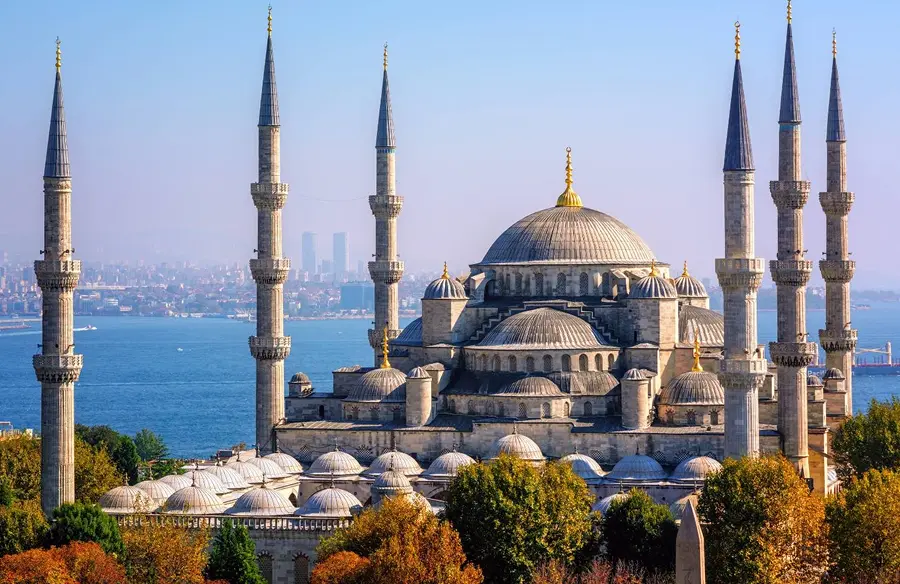
Istanbul rises gently into the traveler’s imagination: minarets over the Bosphorus, ferries stitching two continents together, and neighborhoods where faith, trade, memory, and daily life still meet in the same streets. Begin early on the historic peninsula, when the city is at its softest. Around Hagia Sophia Grand Mosque, Sultan Ahmed Mosque, and the old imperial core, the beauty is not only in the architecture, but in the way morning light, prayer, and movement settle into one another. This is where Istanbul first introduces its grandeur.
Then let the city lead you away from its most photographed face. Around Süleymaniye, the experience deepens in the lanes beyond the mosque itself: sloping streets, old houses, quiet corners, and views that open unexpectedly toward the Golden Horn. This part of Istanbul feels dignified rather than theatrical. It is a place to walk slowly, to pause for tea, and to understand how an imperial city once organized itself around worship, learning, and neighborhood life.
For a more intimate side of the city, cross to the Asian shore and wander through Kuzguncuk. Surrounded by hills and set along the Bosphorus, it is one of those rare neighborhoods that still feels personal. Colorful nineteenth-century Ottoman wooden houses, small streets, and a village-like rhythm make it one of Istanbul’s most charming hidden gems. Nearby, continue toward Çengelköy, where old plane trees, waterfront life, and the easy habit of stopping for tea by the water reveal a Bosphorus mood that belongs more to locals than to sightseeing lists.
Istanbul also rewards the traveler who knows when to leave stone for greenery. Atatürk Arboretum offers ponds, quiet paths, and an almost suspended calm only a short distance from the city, while Belgrad Forest stretches into one of Istanbul’s great walking landscapes, with woodland trails and historic reservoirs. For another lesser-known nature escape, Aydos Forest brings a more local, family-friendly rhythm, with a pond, picnic atmosphere, and the feeling of the city breathing out. These places reveal that Istanbul is not only domes and courtyards, but also water, trees, and silence.
When the city begins to feel dense, take the ferry to the Princes’ Islands. The journey itself is part of the pleasure: sea air, gulls, a widening horizon, and then islands of greenery, villas, bicycle paths, and a slower pace that has long attracted Istanbul residents seeking respite. This is not merely a day trip; it is a different emotional register of the city, one that exchanges imperial scale for serenity.
End in Eyüp, where Istanbul grows quieter and more inward. The district around Eyüp Sultan carries deep spiritual significance, yet what lingers just as much is the atmosphere around it: old cemetery slopes, preserved streets, and the climb toward Pierre Loti Hill, where the Golden Horn spreads below in one of the city’s most memorable views. By then, Istanbul no longer feels like a checklist of monuments. It feels layered, inhabited, and generous to those who stay with it a little longer.
Attractions & Experiences:
Hagia Sophia Grand Mosque & Sultan Ahmed Mosque
Bosphorus Ferry
Blue Mosque
Süleymaniye Mosque and its surrounding quarter
Kuzguncuk neighborhood
Çengelköy waterfront walk
Belgrad Forest trails
Aydos Forest and pond
Princes’ Islands ferry escape
Spice Bazaar (Egyptian Bazaar)
Stroll through Balat neighborhood